
September 15, 2026
How to Coordinate Event Arrivals Without Delays
Learn how to coordinate event arrivals with clear schedules, proper vehicle planning, and professional chauffeur communication for polished events today.
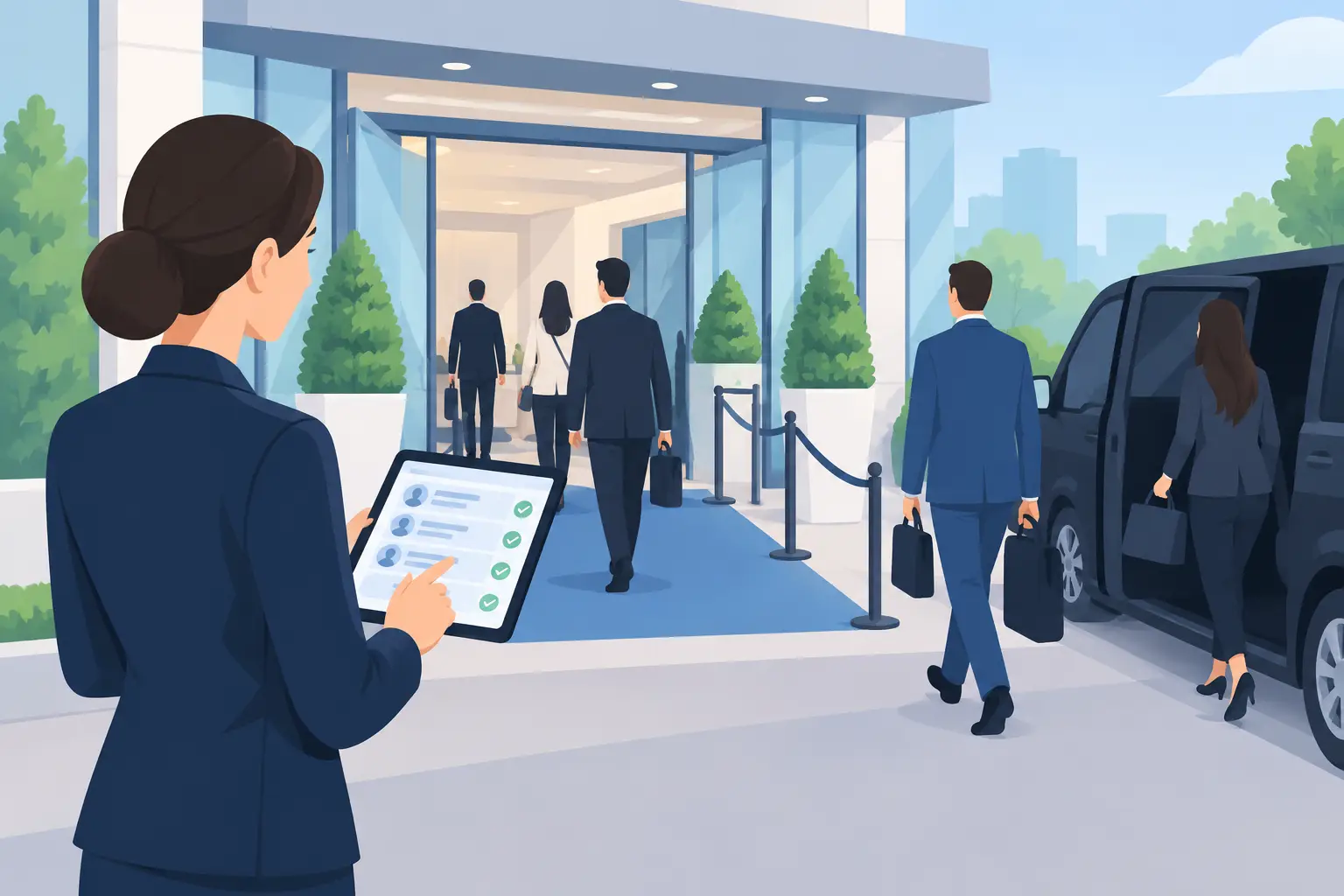
A guest’s first impression of an event is often formed before they reach the door. A late executive, a wedding party split between vehicles, or a driver searching for an unclear pickup point can create stress that carries into the evening. Knowing how to coordinate event arrivals means treating transportation as part of the event plan, not a last-minute detail.
For a corporate dinner in Beverly Hills, a gala in Downtown LA, or a wedding along the coast, the goal is straightforward: every guest arrives safely, comfortably, and at the right time. Reaching that goal requires more than reserving a few cars. It requires a schedule built around real traffic conditions, venue access, passenger needs, and a clear chain of communication.
Start With the Arrival Experience You Want to Create
Before setting pickup times, define what a successful arrival looks like for the event. A board dinner may require discreet, staggered executive arrivals. A wedding may call for the full wedding party to arrive together, while VIP family members use separate vehicles. A red-carpet fundraiser may need a carefully managed curbside sequence so guests can step out without congestion.
This decision guides every other transportation choice. The number of guests alone does not determine the plan. Consider who must arrive together, who needs assistance, who may be arriving from the airport, and which attendees have inflexible schedules. An executive flying into LAX for a Century City dinner has different timing needs than local guests traveling from Santa Monica or Pasadena.
It also helps to designate arrival windows rather than giving every person the same target time. If 80 guests are instructed to arrive at 6:30 p.m., the venue entrance, valet area, and lobby can become crowded within minutes. A better approach may be to schedule hosts and key personnel first, VIPs next, then general attendees across a 20- to 30-minute period.
Build a Transportation Manifest Before Booking Vehicles
A transportation manifest is the working document that keeps the plan organized. It should include each passenger or group, pickup address, pickup time, destination, flight details when relevant, contact number, vehicle type, and special notes. Those notes can cover luggage, mobility requirements, child seats, security protocols, or a request for a discreet pickup.
For a small executive event, the manifest may be simple. For a conference, production wrap party, or wedding, it should identify group leaders and the person authorized to make changes. Avoid sending transportation updates through several people at once. One event coordinator should own the final schedule, with a backup contact available if that person is occupied.
Confirm names carefully. A chauffeur should know whether they are collecting one guest, an executive assistant and principal, or a group of six arriving under a company name. Clear information prevents the familiar curbside confusion of several guests wondering which vehicle is theirs.
Match the Vehicle to the Group, Not Just the Headcount
Vehicle capacity is about more than available seats. Luggage, formalwear, equipment, and personal space all matter. An executive sedan is appropriate for one to three passengers who value a quiet, refined ride. A luxury SUV works well for small groups, airport luggage, or guests who need additional room. A Sprinter van can keep a larger party together and reduce the risk of individual cars arriving at different times.
There is a trade-off. Consolidating guests into one larger vehicle simplifies coordination, but it can create delays if one passenger is late. Separate vehicles offer flexibility, but require more precise staging and communication. For a wedding party with a fixed ceremony time, a Sprinter van is often the better operational choice. For senior executives leaving a dinner at different times, individual sedans or SUVs may provide a better experience.
How to Coordinate Event Arrivals Around Los Angeles Traffic
Los Angeles timing should never be based on a map estimate alone. Traffic patterns can shift sharply around freeway incidents, concerts, sporting events, road work, and weather. A trip from West Hollywood to a Downtown LA venue may be routine one evening and substantially longer the next.
Build a practical buffer into every pickup and arrival window. For a time-sensitive event, plan for guests to arrive early enough to settle in, check in, and reach their seats without being rushed. This does not mean asking everyone to sit outside the venue for an hour. It means scheduling transportation with realistic travel time and a measured contingency.
Venue access deserves the same attention. Ask where chauffeurs should enter, whether there is a designated loading zone, if the street permits waiting, and who will meet guests at the curb. Some hotels and private clubs have specific procedures for black car arrivals. Large venues may direct vehicles to a side entrance or staging area. A polished vehicle arriving at the wrong gate is still a late arrival.
For high-traffic locations, establish a vehicle staging plan. Chauffeurs can be dispatched in sequence rather than circling the block or filling the curb before passengers are ready. This is especially valuable for galas, premieres, and private events with limited frontage.
Give Chauffeurs the Details That Protect the Schedule
Professional chauffeurs can manage traffic, route changes, and curbside conditions, but they need accurate instructions. Provide the venue’s exact address, entrance name, contact person, arrival window, and any access credentials or gate codes. If guests are attending a private residence, include clear guidance on where vehicles may wait without disrupting neighbors or blocking the driveway.
For events involving flights, provide airline, flight number, arrival date, and passenger name exactly as shown on the reservation. Real-time flight monitoring allows transportation to adjust when an incoming flight is delayed or arrives early. It is a meaningful safeguard for airport-to-event service, particularly when international guests are heading directly from LAX to a meeting, reception, or dinner.
Do not rely on a guest to relay all instructions while walking through an airport terminal or preparing for a formal event. The transportation provider and event coordinator should have the same operational information before the day begins.
Send Guests a Short, Useful Arrival Message
Guests do not need the full transportation plan. They need the details that affect them: pickup time, pickup location, vehicle arrangement, chauffeur contact process, and a reminder to be ready a few minutes early. Keep the message direct and send it early enough for questions to be resolved before event day.
If guests are being transported in groups, tell them who they are riding with. If the pickup location is a hotel, specify the lobby, porte cochere, or side entrance. For airport passengers, explain the meeting procedure in plain language. The more specific the instructions, the less likely a guest is to wander toward the wrong pickup zone.
For premium events, it is wise to send a final confirmation the day before. This is not unnecessary formality. Addresses change, flight times move, and guests occasionally provide a different hotel or office location after the initial reservation.
Plan the Departure Before the Event Begins
Arrival coordination gets the attention, but departure plans protect the guest experience just as much. At a corporate dinner, some executives may need to leave early for flights or next-day commitments. At a wedding, guests may leave in waves after the reception. At a gala, the last 15 minutes can create a sudden demand for vehicles.
Create a departure strategy that matches the event. For staggered departures, keep a dispatcher or event contact informed about requested pickup times. For a large group leaving together, stage vehicles before the program ends. Guests should not have to wait on the curb in formal attire while transportation is still being arranged.
A professional transportation partner can help determine whether hourly service, point-to-point reservations, or a combination of both is most appropriate. Hourly chauffeur service offers flexibility when the agenda may run late or guests need multiple stops. Fixed point-to-point service can be the more efficient choice for clearly scheduled arrivals and departures.
Use One Accountable Transportation Partner
Fragmented transportation creates fragmented responsibility. When guests are split across rideshare apps, individual reservations, and multiple vendors, no one has a complete view of the schedule. That can lead to different vehicle standards, inconsistent receipts, surge pricing, and no clear person to call when plans change.
Working with one professional provider gives the event organizer a single operational contact, consistent vehicle presentation, and a coordinated fleet plan. For corporate teams, it can also support centralized billing, reporting, and account-level oversight. iRide360 coordinates executive sedans, luxury SUVs, and Sprinter vans with California-licensed chauffeurs for events where punctuality and presentation are part of the host’s standard.
The right plan is not necessarily the one with the most vehicles. It is the one that accounts for real passenger behavior, local traffic, venue constraints, and the moments when plans change. When transportation is managed with that level of care, guests can focus on the event ahead rather than the logistics behind it.