
November 7, 2026
Flight Tracking Benefits for Airport Travelers
See how flight tracking benefits airport travelers with timely pickups, clearer communication, and confident ground transportation from arrival to hotel.
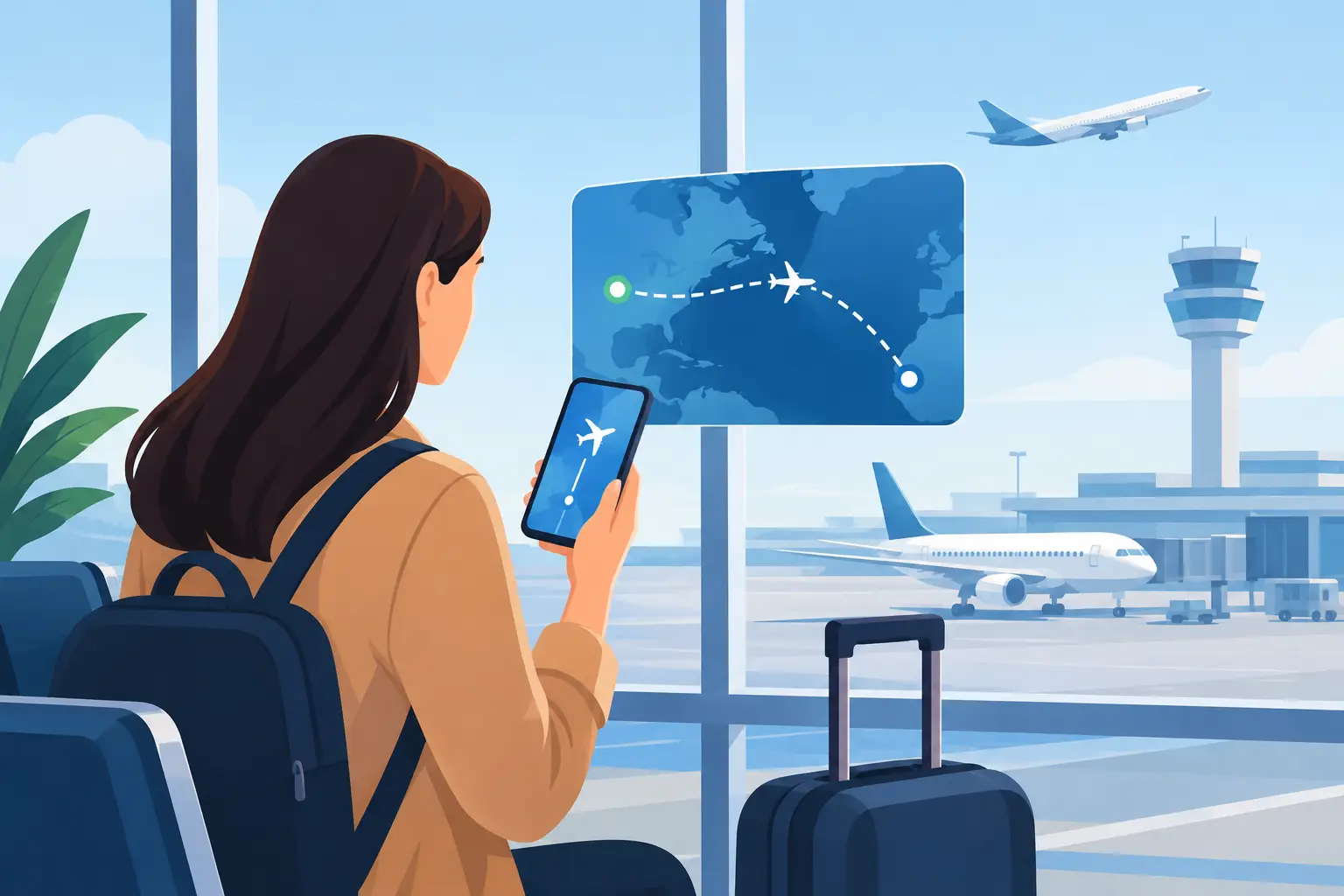
A flight can leave on time, circle before landing, arrive early, or sit on the tarmac after touchdown. For a traveler with a meeting in Century City, a client dinner in Beverly Hills, or a hotel reservation in Santa Monica, those changes affect far more than the arrival board. The practical flight tracking benefits begin with one simple outcome: your ground transportation can respond to the flight you actually took, rather than the itinerary you booked days ago.
That distinction matters at Los Angeles-area airports, where gate changes, terminal congestion, baggage delays, and traffic conditions can quickly turn a routine pickup into an unnecessary point of stress. Professional flight monitoring is not a decorative feature on a reservation. It is an operational standard that helps keep the chauffeur, vehicle, and traveler aligned.
Flight Tracking Benefits Start Before Landing
When a chauffeur service monitors an incoming flight in real time, dispatch is working from live arrival information rather than asking the passenger to provide updates while in the air. If a flight departs late, the planned pickup timing can be adjusted before the chauffeur begins the airport approach. If it lands early, the service has advance notice to prepare accordingly.
This creates a more measured arrival experience. The traveler does not need to land, turn off airplane mode, and immediately begin coordinating a ride. Instead, they can focus on deplaning, collecting belongings, and following the agreed pickup instructions.
For executive assistants and travel managers, this is especially valuable. A delayed arrival should not trigger a string of calls between the passenger, assistant, chauffeur, and dispatcher. Flight monitoring reduces avoidable handoffs while preserving visibility into the trip.
Better timing for airport pickups
The most obvious benefit is timing, but timing involves more than knowing when wheels touch down. A properly planned airport pickup accounts for the difference between arrival time and curb-ready time. International arrivals may involve immigration and customs. Travelers checking bags need more time than those traveling with carry-ons. At a busy airport, reaching the correct pickup location can take longer than expected.
Live tracking gives the transportation team a reliable starting point for these variables. It does not eliminate every airport delay, and no responsible service should promise that it can. It does, however, prevent a chauffeur from operating on outdated flight information.
At iRide360, real-time flight monitoring works alongside a 60-minute airport wait period, giving arriving passengers room to move through the airport without feeling rushed. That margin is particularly useful after a long flight, when the last thing a traveler needs is pressure to race through baggage claim or navigate an unfamiliar terminal.
Why Flight Tracking Matters for Business Travel
A missed connection or delayed departure can disrupt a tightly planned business day. It may affect a board meeting in Downtown LA, a legal proceeding, a production schedule, or an investor dinner. Ground transportation cannot control the aircraft, but it can avoid adding a second operational problem after the flight changes.
For business travelers, flight tracking supports continuity. The chauffeur and dispatch team can revise the timing of the pickup while the passenger remains unavailable in flight. When the traveler arrives, the transfer is already being managed rather than started from scratch.
This is also where a professionally managed car service differs from simply requesting a vehicle after landing. On-demand availability can be useful in certain situations, but it places the burden of booking, vehicle selection, pricing, and pickup coordination on the traveler at the exact moment they may be least available. Prearranged service with flight monitoring shifts that burden to a team whose job is to manage it.
A more dependable experience for visiting clients
When a company is bringing in a senior executive, candidate, speaker, or client, airport transportation is part of the welcome. A missed pickup or a confusing curbside exchange can undermine an otherwise carefully organized visit.
Flight tracking allows the host organization to arrange transportation confidently without repeatedly checking on an arriving guest. The chauffeur can be positioned according to updated flight status, while the passenger receives clear pickup instructions. The result is a more composed first impression and fewer last-minute messages from an executive assistant or event coordinator.
Corporate accounts benefit from this consistency at scale. When multiple employees or guests are arriving through LAX, Burbank, John Wayne, or Long Beach, standardized monitoring and centralized trip management make it easier to maintain the same service standard across each reservation.
Flight Tracking Benefits for Chauffeur Operations
Passengers see the outcome of flight tracking, but the operational value happens behind the scenes. Real-time information helps dispatch coordinate chauffeur schedules, vehicle availability, airport staging, and subsequent reservations. This is particularly important when a late incoming flight could overlap with another scheduled trip.
A luxury transportation company should not treat a delayed flight as a surprise. It should use the updated information to make thoughtful scheduling decisions and communicate when needed. That may mean revising the chauffeur's approach time, assigning another qualified chauffeur, or preparing a different vehicle if the passenger count or luggage needs have changed.
The quality of that response depends on the service provider. Flight tracking is useful, but it is not a substitute for capable dispatch, licensed chauffeurs, and a well-maintained fleet. Travelers should look for all of these elements together, especially when the trip involves a time-sensitive meeting, a family arrival, or an important event.
Less Waiting, Less Guesswork at the Curb
Airport pickup confusion often comes from unclear expectations. A passenger may assume the chauffeur is waiting immediately outside the terminal, while the chauffeur may be following airport regulations that require a different pickup zone or timing. Flight tracking improves coordination, but clear communication still matters.
Before the trip, travelers should know how the pickup will work: whether they will receive a text after landing, where they should collect luggage, which terminal exit or designated zone to use, and how to identify the chauffeur or vehicle. A professional service should provide concise instructions suited to the airport and the type of arrival.
For travelers arriving at LAX after an overnight or cross-country flight, this clarity is a genuine comfort. Instead of comparing vehicle details on several apps or wondering whether a driver has canceled, they have a defined plan and a transportation team that is already aware of the flight's status.
The Limits of Flight Monitoring
Flight tracking is highly useful, but it is not a guarantee against every delay. Airlines may update arrival data late. A gate assignment can change after landing. Baggage delivery, customs processing, weather, traffic, road closures, and airport access restrictions remain outside the control of a ground transportation provider.
That is why the best airport transfer experience combines monitoring with practical policies. Adequate wait time, responsive dispatch, clear passenger communication, and chauffeurs who understand airport procedures are just as important as the technology itself.
Travelers also play a role. If a reservation includes an incorrect flight number, a last-minute airline change, additional passengers, or unusually large luggage, sharing that information promptly helps the service plan accurately. Real-time tracking works best when the reservation details are complete from the beginning.
Choosing a Service That Uses Tracking Well
Not every company that mentions flight tracking delivers the same level of care. Ask whether the service monitors flights proactively, how long it waits after arrival, and who handles changes outside regular business hours. Consider whether the quoted price is fixed or subject to surge pricing and whether the vehicle class is appropriate for your group and luggage.
For a solo executive traveling light, an executive sedan may be the right fit. For a family, a corporate team, or travelers carrying presentation equipment, a large SUV or Sprinter van may offer more comfort and capacity. The right vehicle should be confirmed before arrival, not improvised at the curb.
Airport transportation is at its best when it feels uneventful: the flight changes, the chauffeur adjusts, and the traveler reaches the next commitment without having to manage the logistics. That is the quiet value of attentive flight monitoring - not more notifications, but fewer things demanding your attention when you land.