
September 23, 2026
Event Transportation That Keeps Every Detail On Time
Event transportation protects your schedule, guest experience, and budget. See how professional planning keeps arrivals polished, punctual, and accounted for.
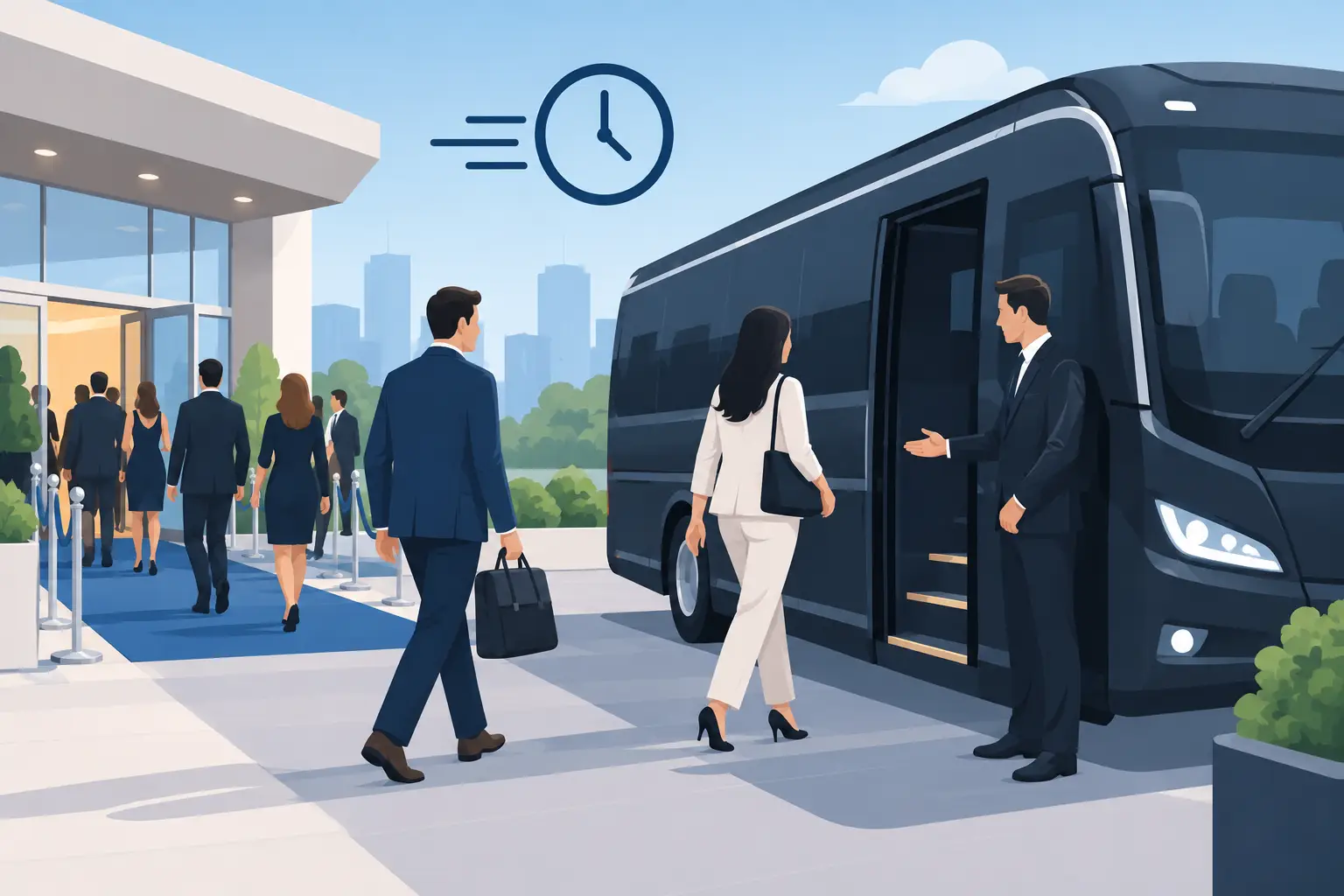
A gala can have a flawless guest list, a remarkable venue, and a carefully timed program, then lose its polish at the curb. Event transportation is where the evening’s promises become visible: a guest waits alone outside, a VIP arrives through the wrong entrance, or a wedding party is split between vehicles with no clear plan. Professional coordination prevents those small failures from becoming the story people remember.
For hosts, executive assistants, planners, and corporate teams, transportation is not simply a reservation count. It is a live operational plan involving arrival windows, passenger groups, luggage, venue access, traffic conditions, and a clear chain of communication. In Los Angeles, where a 20-minute drive can change quickly with freeway conditions, a polished service requires more than sending a vehicle when the calendar says to.
Start Event Transportation With the Schedule
The best transportation plan starts with the moments that cannot move. A ceremony start time, keynote address, airport arrival, dinner seating, or venue curfew should drive every pickup and departure decision. Work backward from those anchors, allowing time for loading, traffic, security access, and the fact that guests rarely emerge from an event all at once.
This is particularly important for corporate dinners, investor meetings, production events, and weddings. A principal may need to arrive discreetly before guests. A speaker may need a direct airport-to-venue transfer after a delayed flight. A wedding party may need several stops before reaching the ceremony. These are different assignments, even when they occur on the same evening.
A detailed manifest turns a general request into a workable plan. It should identify passenger names, mobile numbers when appropriate, pickup addresses, flight details, vehicle assignments, luggage needs, destination entrances, and the person authorized to make changes. For larger groups, it also helps to note whether riders are traveling together, arriving independently, or need return transportation at different times.
Build in realistic timing, not hopeful timing
Los Angeles event schedules often fail because the transportation window assumes ideal traffic and immediate guest readiness. Neither is a dependable assumption. A professional plan includes a buffer before critical arrivals, particularly for trips to downtown venues, Hollywood events, Beverly Hills hotels, or LAX.
The right buffer depends on the event. A board dinner with a small executive group may need a discreet early arrival and a chauffeur waiting nearby. A wedding may need staged pickups that begin well before photography or ceremony call time. A large gala may require vehicles to arrive in waves so the curb does not become congested.
Match the Vehicle to the Assignment
Vehicle selection should reflect the passenger experience and the practical requirements of the ride. An executive sedan is well suited to an individual client, executive, or airport guest who values a quiet, private cabin. A luxury SUV offers additional room for passengers and luggage, making it a strong choice for small groups, airport arrivals, and families attending formal occasions.
For groups that need to travel together, a Sprinter van can protect timing and simplify coordination. Keeping a team, wedding party, or visiting delegation in one vehicle reduces missed messages, inconsistent arrival times, and the need for multiple people to navigate an unfamiliar venue. It can also make the ride part of the occasion rather than a logistical interruption.
Capacity alone should not decide the vehicle. Consider attire, luggage, accessibility needs, the length of the route, and whether guests will be carrying gifts, production materials, or presentation equipment. A full-size SUV may technically accommodate a group, but a more spacious vehicle can be the better decision when formalwear, comfort, and a polished arrival matter.
Treat Airport Arrivals as a Separate Operation
When event guests are flying in, airport transportation deserves its own plan. Flight delays, gate changes, baggage timing, and terminal congestion introduce variables that do not apply to a standard pickup. A chauffeur service that monitors flights can adjust to the actual arrival rather than relying on the original itinerary.
For LAX pickups, clear instructions make a meaningful difference. Guests should know how their chauffeur will communicate, where the meeting point is, and what to do if they need extra time for baggage. A 60-minute wait period after landing gives travelers room to deplane and collect luggage without feeling rushed. It also gives organizers greater confidence that a delayed airport process will not immediately create a service issue.
Fixed pricing is equally valuable for event budgets. Airport trips and guest transfers should not become more expensive because demand rises at the same time as a major event, holiday weekend, or convention. No surge fees and no surprise charges make it easier to approve transportation in advance and reconcile expenses afterward.
Plan the Curbside Experience
The final hundred feet of an event transfer can be the most complicated part. Many prominent venues have limited curb access, valet lanes, security checkpoints, or separate entrances for vendors, guests, and VIPs. A vehicle arriving at the correct address is not always arriving at the correct place.
Confirm the preferred entrance, staging area, and contact person before the event. If there is a red carpet, security detail, hotel valet, or venue traffic manager, transportation should be coordinated with those teams rather than operating around them. This is how guests step out calmly instead of being directed across a busy drive with no clear guidance.
Departure planning deserves the same attention. At the end of a gala or reception, everyone may request a vehicle within the same ten minutes. Prearranged departure windows can reduce the rush, while a designated transportation coordinator can manage last-minute adjustments. For executive events, it is often useful to keep a chauffeur and vehicle available hourly so leadership can leave when needed without waiting for a new dispatch.
Keep One Person Accountable for Changes
Event plans change. A keynote runs long. Dinner service is delayed. A guest’s flight diverts to Burbank or John Wayne Airport. The value of a professionally managed transportation program is not that it assumes a perfect schedule. It is that there is a clear process when the schedule moves.
The organizer should know who can update pickup times, add a stop, reassign a passenger, or authorize an additional vehicle. The transportation provider should have the relevant venue details and an accessible point of contact who can make decisions quickly. This avoids the familiar problem of three people texting different instructions to different drivers.
For recurring corporate events, a managed account can add further control through consolidated monthly invoicing, ride reporting, priority dispatch, and a dedicated account contact. Finance teams gain cleaner records, while executive assistants spend less time tracking individual receipts or explaining service expectations before each reservation.
Choose Service Standards Guests Can Feel
Guests may never ask whether a chauffeur is California-licensed, background-checked, or trained in executive hospitality. They will notice the result. They notice when the vehicle is immaculate, the chauffeur is professionally presented, the route is handled confidently, and the pickup happens without repeated calls or uncertainty.
Those standards matter most when the people riding are important to the host: a client being courted, a senior executive, a wedding couple, a speaker, or family members unfamiliar with the area. Rideshare availability can be useful for casual individual trips, but it is rarely the right foundation for an event where presentation, consistency, and timing are part of the experience.
iRide360 coordinates luxury sedans, SUVs, and Sprinter vans for Southern California events with professional chauffeurs, fixed-price planning, and 24/7 support. The objective is straightforward: vehicles, people, and schedules should arrive as expected, even when the evening does not unfold exactly as planned.
A well-run transportation plan lets hosts focus on the room, not the roadway. When the last guest departs with the same confidence they felt on arrival, the service has done more than move people - it has protected the event itself.